
What the rai stones of Yap reveal about money
Somewhere off the coast of Yap, in the Caroline Islands out in the Pacific, there is a sunken fortune nobody has seen in more than a hundred years.
Nobody is going to salvage it.
And yet, for a century, people have owned it, inherited it, and treated it as real, spendable wealth.
This Benchmark is about a form of money which reveals how much financial systems depend upon consensus and belief.
Quarrying wealth from a limestone cave
Yap is a small, remote island in Micronesia. It has no metal ore worth mining and no hard stone of its own.
So for centuries, Yapese crews sailed roughly 250 miles by canoe and raft to (relatively) nearby Palau.
There they quarried limestone from a specific cave system by hand, and carved it into enormous discs — flat, round, with a hole punched through the centre so a pole could be run through for carrying.
The smallest were the size of a dinner plate. The largest ran to 12 feet across and weighed several tons.
They’re called rai:
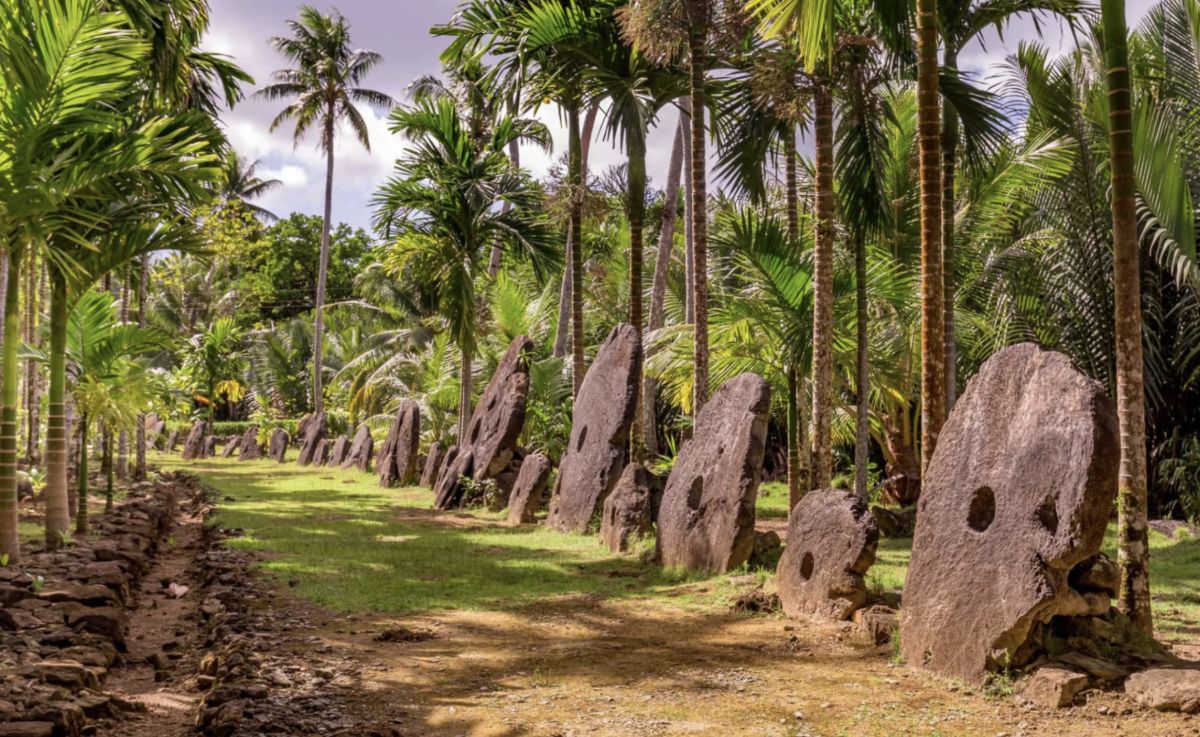
Many Yapese died transporting these discs back to their island across open ocean.
A rai's value rested not on its size, but on its age, the quality of the carving, and the danger of the journey that produced it — including, grimly, how many lives it had cost.
A smaller stone with a harrowing human cost could outvalue a larger one which had been easier to come by. The Yapese priced in provenance 900 years before wine collectors and art dealers made a pseudo-science of it.
Rai weren't small change. Nobody used a rai to buy fish. They were reserved for the transactions that mattered most in Yapese life: a dowry, a parcel of land, a political alliance, restitution for a serious wrong.
The stone at the bottom of the sea
The largest rai stones were far too heavy to move once ashore. So when ownership changed hands, the stone remained where it rested. Nobody dragged eight thousand pounds of limestone across the village. The community simply noted, and remembered, that it now belonged to someone else.
This wasn't informal or vague. It was tracked as carefully as any deed — passed down through oral history, publicly acknowledged, disputed if necessary. The record was the asset, the stones its symbol.
Which brings us to the most famous rai of all. American physician-turned-anthropologist, William Henry Furness, spent two months living on Yap in 1903 and documented what he saw in a book published in 1910.
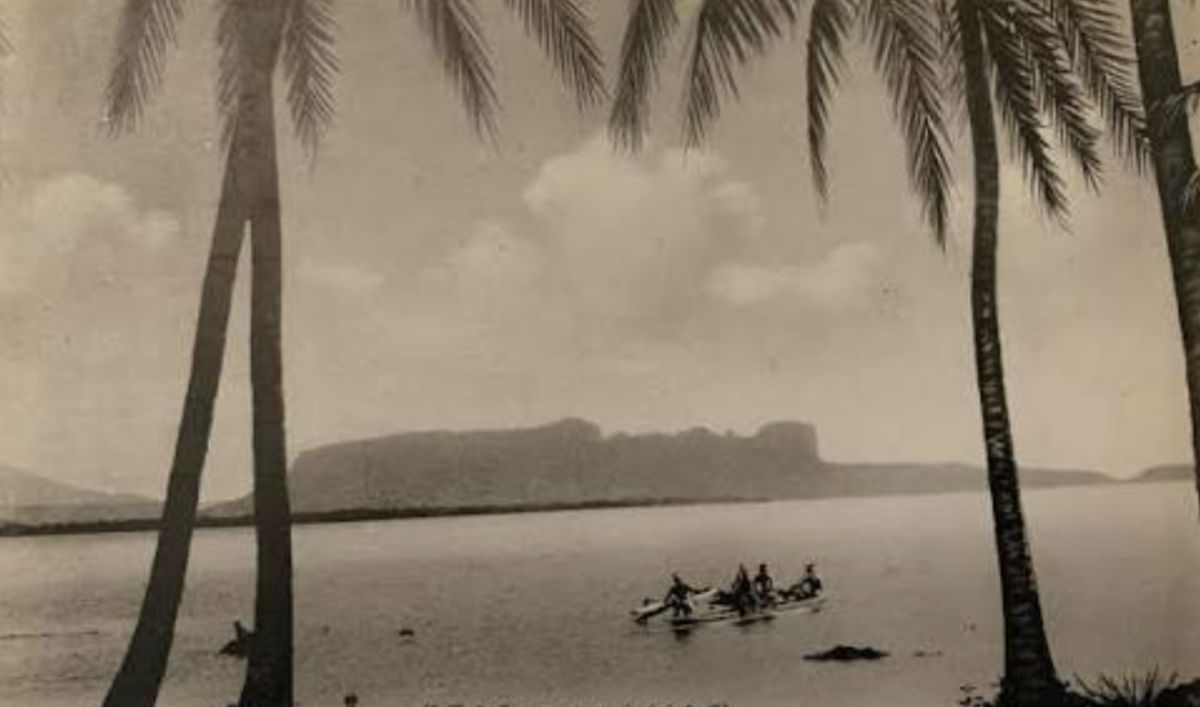
Among the stories he recorded: a crew was rafting home an unusually large, finely carved stone when a storm hit. To survive, they cut it loose and let it sink into the ocean.
When the crew made it home and explained what had happened, the community decided not to write the stone off. They agreed it had existed, had been properly made, and had been lost through no fault of the owner's — and that a few hundred feet of water shouldn't affect what it was worth.
The stone kept its value. It kept changing owners. It just remained beneath the waves rather than leaning up against someone’s house on the island.
The Germans learn how to get things done on Yap
Germany bought the Carolines, Yap included, from Spain at the turn of the century, and colonial officials ran into a problem: they needed the footpaths repaired, and the islanders weren't cooperating. Warnings and repeated commands went nowhere.
So they tried something. An official marked several of the most valuable rai with a black cross, declaring the stones now claimed by the government — with the understanding the marks would come off once the paths were fixed. The stones weren't moved or touched beyond the paint.
The paths got repaired, island-wide. Then the government erased the crosses, and the stones' owners resumed possession of wealth that had never physically left their side.
People only needed to believe the ownership had changed, and then believe it had changed back.
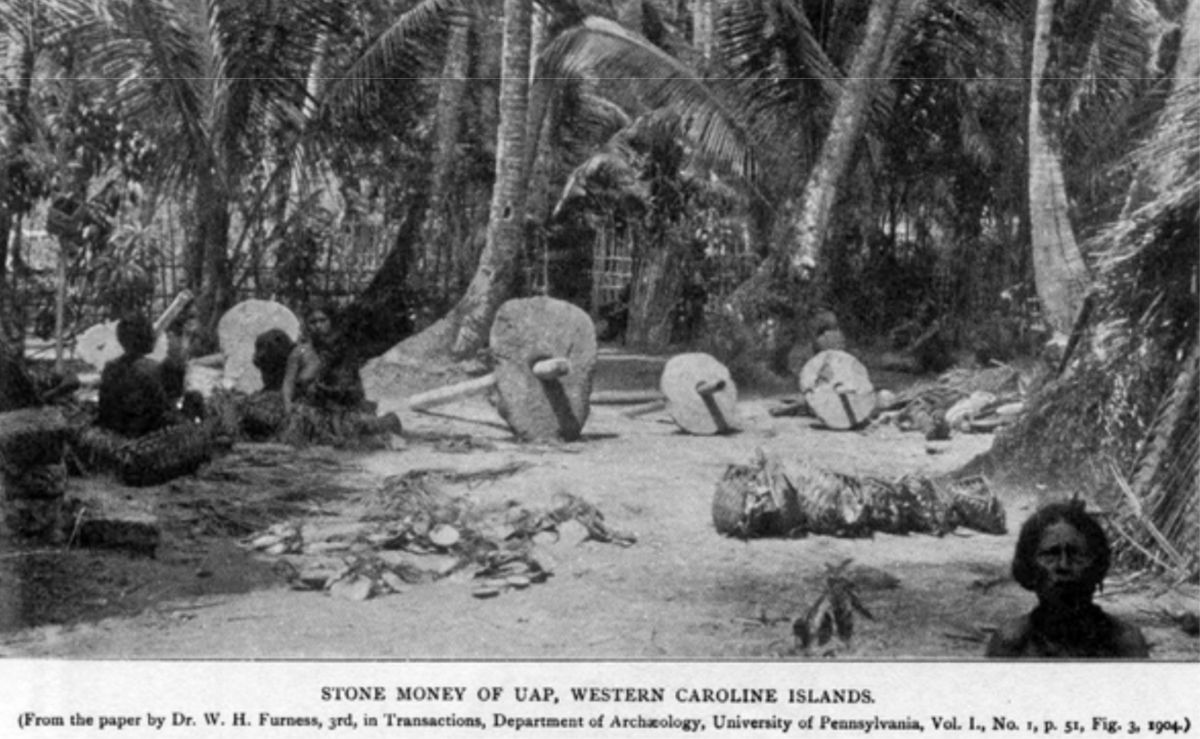
Like the sunken stone, all this required to work was consensus.
America’s 1932 ‘black cross trick’
The person who made Furness's book famous beyond anthropology was Milton Friedman — Nobel laureate, and the intellectual godfather of modern monetarism.
He came across it decades later and used both of Furness's stories to open a 1991 essay on how money actually works.
Most people who tell this story stop at the punchline: primitive islanders, silly system. Friedman didn't stop there. He pointed out that the world's most sophisticated financial system had run its own version of the black-cross trick, a few years later, in a basement in Manhattan.
In 1932, the Bank of France grew nervous that the United States might abandon the gold standard, and asked the New York Federal Reserve to convert its dollar holdings into gold.
Rather than ship the gold across the Atlantic, the Fed did something simpler: it walked into its own vault, set aside the correct amount of gold in separate drawers, and labelled those drawers as belonging to France. Nothing moved. The label change was the whole transaction.
Friedman's point was not that Yap was quaint. It was that we do the same thing, dressed up in better paperwork.
Wealth can move without money moving
The US dollar is Yap's everyday currency today. But the stones remain. The last one was quarried and hauled home in 1931, and the roughly six thousand still scattered across the island remain in use today for ceremonial purposes.
Today, there's a similar story playing out with gold.

Central banks now hold close to $4 trillion in gold between them — for the first time on record, more than they hold in US Treasuries. A large share of it doesn't sit in the country that owns it. It sits in vaults in New York and London, placed there decades ago for convenience, liquidity, and trust in the custodian.
That trust took a serious hit in 2022, when the US and its allies froze Russia's foreign reserves as a sanction. The lesson landed on every central bank simultaneously: an asset held in someone else's vault, at someone else's discretion, is not entirely yours.
Germany is living that lesson in public right now. It still holds 1,236 tonnes of gold — more than a third of its total reserve — in the New York Fed's vault, the single largest foreign gold position held there by any country.
German economists and politicians have spent 2026 pushing to bring it home, citing the unpredictability of the current US administration. The Bundesbank's position, for now, is that New York remains a trustworthy custodian.
France has already quietly done its own version. Between mid-2025 and early 2026, the Banque de France sold off older-format gold bars it held in New York and used the proceeds to buy newer, London-standard bars for storage in Paris — twenty-six separate transactions without a single bar crossing the ocean. The bookkeeping alone produced a gain of roughly €12.8 billion.
Wealth takes many forms.
A stone disc on the seafloor.
Gold re-tagged in a Manhattan vault in 1932.
Or quietly reassigned between New York and Paris in 2026.
Ninety-four years and thousands of miles apart, and it’s the same thing each time: the object stays put, but the value moves, because enough people agree that it has.
This week's quote:
"Money is the most universal and most efficient system of mutual trust ever devised."
— Yuval Noah Harari (Sapiens)
Invest in knowledge,
Thom
The Benchmark
Read more: $457 million a day: Inside the superannuation machine.
Share: Forward this email to someone you know would appreciate it.
Connect: Add me on LinkedIn
Become a reader:Subscribe to The Benchmark.
Enjoyed this issue?
Subscribe to The Benchmark
Weekly insights on markets, investing, and portfolio strategy.