

Welcome back to The Data-Driven Investor, an eight-part series on using better portfolio data to make more informed investment decisions.
In the first article, I wrote about why capital gains alone do not tell the full performance story.
This second article is about something just as important: having a strategy.
Are you freaking out about your investments right now?
Compulsively checking your phone...
Pacing the room...
Doom-scrolling endless headlines about bank collapses and inflation rates...
Even, God forbid, considering selling all your investments and waiting for things to calm down?
If that’s you, chances are you may not have something that can help separate calm, consistent investors from those making decisions in the heat of the moment.
This thing is free and widely available.
And yet, too few of us understand its importance and value.
While panicked and fearful investors may not choose it, use it or benefit from it...
Calmer, more disciplined investors may be relying on it right now.
I’m talking about strategy.
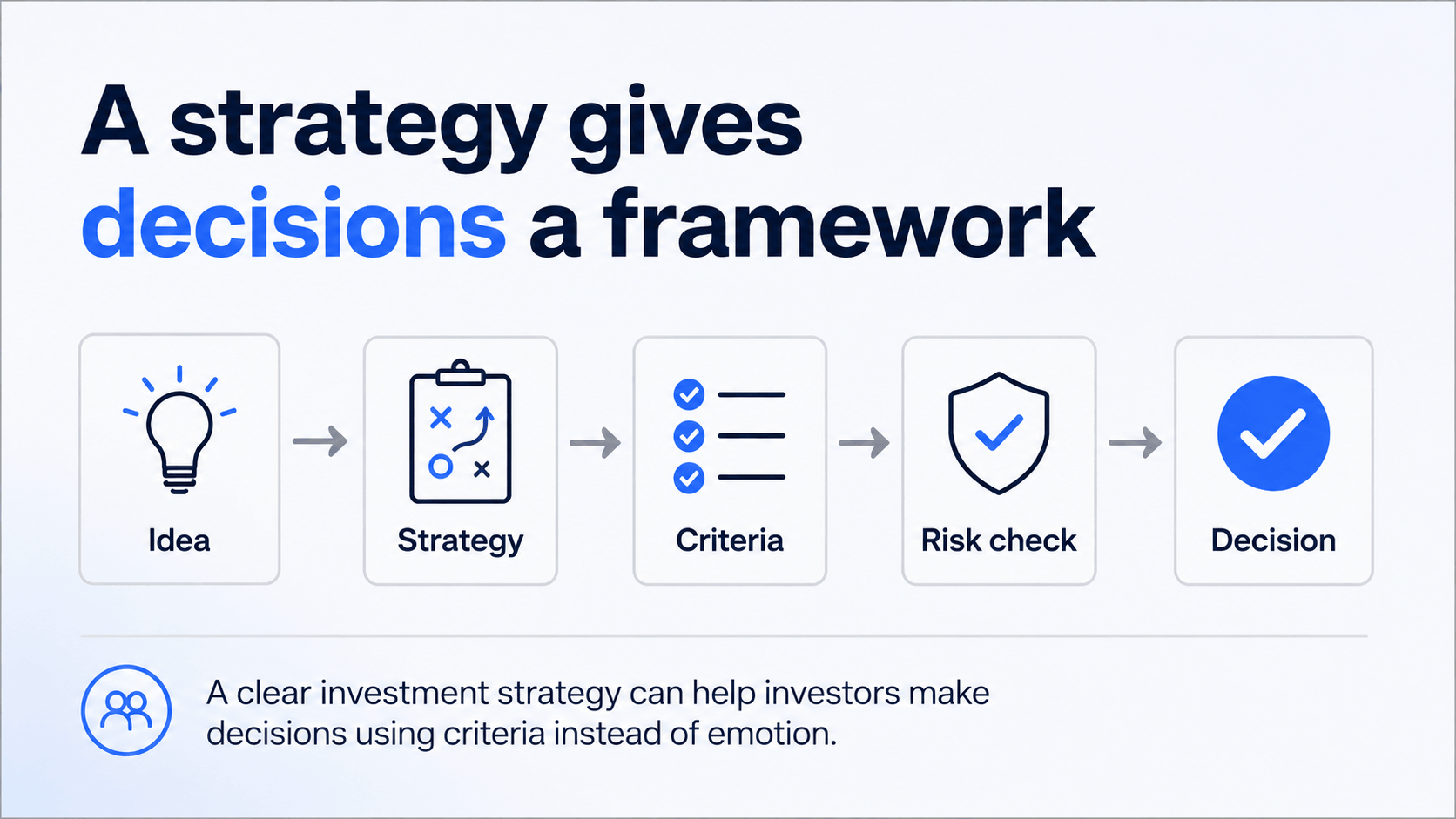
Investment strategy can help you reduce emotional decisions and give you a clearer framework during stressful markets.
Well, relatively speaking, shall we say, compared with those who buy and sell based purely on emotion, for example.
Here are three problems a clear investment strategy can help with.
1. Emotional Decisions Can Lead To Emotional Reactions
Back when I started investing, I had no idea what I was doing.
I remember buying into investments, only to sell out of them within a couple of weeks.
And paying trading fees both ways.
I’d get ‘tips’ from colleagues at work, or ‘ideas’ from online forums.
Ultimately, I couldn’t hold on to anything long term.
Because I would freak out and sell.
Because I didn’t know why I’d bought in the first place, basically.
Because I had no strategy guiding my decision-making.
But once I had a strategy, this completely changed.
Because now it wasn’t up to my emotions alone whether I bought, held or sold a stock.
It was up to the strategy I had selected, and the criteria for decision-making that came with it.
Did it meet the criteria for selling?
Then I could consider selling.
Otherwise, I was holding on for the ride.
With my strategy, I didn’t worry about those decisions in the same way.
I chose my strategy so it could guide my shorter-term decisions.
Choosing a strategy is another subject which I’ll dive into in a later newsletter.
2. Bad Moves, Made For Bad Reasons
The next thing a strategy can help with is choosing investments in a more structured way.
It doesn’t matter when you buy or sell if the investment itself does not fit your goals, approach or criteria.
Think about these two questions.
Buy the stock because a friend told you it was a good idea?
Or...
Buy because you have a set process that you filter any investment through?
Which do you think gives you a clearer basis for making the decision?
Having a strategy that helps determine what you buy can make a big difference.
That way, you can keep reviewing and improving your approach based on set criteria, rather than making it up as you go along.
3. To Be Underprepared Is To Risk Underperformance
Ultimately, many investors want strong long-term performance from their investments.
They want their money working hard for them while they sleep.
As with anything in life, not having a plan can make it harder to stay on track.
Having a strategy may help keep you on the right path.
Even if that path turns out not to be the right one for you, having a consistent strategy can help you figure that out sooner.
Which means you can then review, adjust and consider whether another approach may suit you better.
This can help you better understand what is and isn’t working.
If you have no strategy, you may never figure this out.
Strategy And Consistency Go Hand In Hand
Choosing and committing to a clear investment strategy may help you:
- reduce stress during market volatility
- reduce emotional decision-making
- assess investments using clearer criteria
- review and improve your investing process over time
There are many strategies out there.
The key is finding an approach you understand, can commit to, and can review properly over time.
From there, you may be able to rest a little easier about your investments, knowing you’re investing according to a plan rather than reacting to every headline.
Knowledge pays the best interest,
Navarre
The Data-Driven Investor
Track Your Portfolio Against Your Strategy
Navexa helps investors track portfolio performance, income, currency impact, realised gains, unrealised gains and tax-related reporting data in one place.
That matters because a strategy is much easier to follow when you can see what is happening across your portfolio.
With clearer data, you can review your portfolio more consistently, understand what has changed, and prepare better questions for your accountant, tax adviser or financial adviser.
Start tracking your portfolio with more clarity.
Disclaimer
This article is general information only and does not constitute financial, legal or tax advice. It does not take into account your personal objectives, financial situation or needs. Past performance is not a reliable indicator of future performance. Investment strategies involve risk and may not be suitable for every investor. Always speak with a qualified professional before making financial, legal or tax decisions.